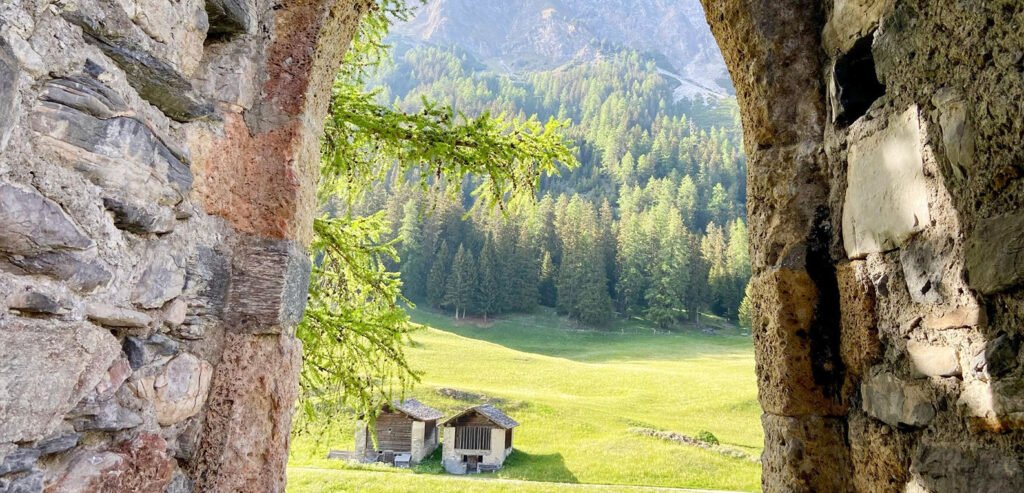
Switzerland
Switzerland is situated in Central Europe and borders Germany, France, Italy, Liechtenstein and Austria. It is a small country with great diversity and a long tradition of direct democracy: with four official spoken languages (Swiss German, French, Italian and Romansh), corresponding cultural regions and geographically very diverse areas, ranging from the palm trees in the south to high mountains and the flat, gentle landscape of the north.
The majority of the approximately 9.1 million inhabitants live on the Swiss Plateau, home to major cities such as Zurich and Geneva; the Swiss Alps, however, make up the largest geographical part of the country.
Pluralism is also a defining feature of Switzerland in other respects. 26–27 per cent of the population are foreign nationals. Furthermore, Switzerland practises a distinct form of federalism, comprising 26 different cantons (the Swiss equivalent of states).
Politically, Switzerland operates a multi-party system and does not have a single president, but a collegial executive body, the Federal Council, comprising seven members elected by Parliament from different parties, with a rotating chairperson serving for one year.
Switzerland has maintained a policy of armed neutrality since the 16th century and is often involved in peacebuilding. It is a member of the Council of Europe and the UN, is a founding member of the European Free Trade Association (EFTA) but is not a member of the European Union (EU).
Switzerland is the birthplace of the Red Cross and home to many international organisations. Among other institutions, the Committee on the Rights of Persons with Disabilities is based at the United Nations Office in Geneva, the UN’s second headquarters.
Entry into Switzerland
Switzerland is a member of the Schengen Agreement. Various regulations apply to entry into Switzerland. A basic distinction is made between citizens of EU and EFTA countries and those of other countries. All the important entry information can be found here: Information regarding entry into Switzerland and residence. The same information is also available there in German, French and Italian.
Visa Requirements
For some countries outside the EU and EFTA, a visa is required – here is an overview of the relevant provisions: Overview of ID and visa provisions according to nationality (Annex CH-1, List 1)*.
A visa application must be submitted at least 15 days before the planned date of departure. The earliest possible date for submitting the application is six months before the planned entry into the Schengen Area. The relevant Swiss authorities recommend submitting the application as early as possible – so better do that six months before the conference.
Applications for a Schengen visa must generally be submitted to the Swiss diplomatic mission responsible for the applicant’s place of residence, using the visa application form and via the procedure specified by the diplomatic mission. Further details can be found on the website of the relevant diplomatic mission.
The World Conference can provide some support behind the scenes, provided the relevant details are supplied at the time of registration. To this end, the conference must submit a list of participants requiring a visa to the Swiss State Secretariat for Migration no later than three months before the event. The list of participants must include the surname and first name, date of birth, nationality and, ideally, the travel document number of each participant.
Travelling to the World Conference Information on travelling to Switzerland and Davos, as well as details of the conference venue, can be found here: Conference Venue – DbI & WFDB World Conference 2027